Table Of Content

The significant advancements in septic tank technology during the 1970s resulted in more efficient waste removal and treatment, ensuring healthier living conditions while minimizing environmental impact. The design and size of a septic system can vary widely, from within your neighborhood to across the country, due to a combination of factors. These factors include household size, soil type, site slope, lot size, proximity to sensitive water bodies, weather conditions, or even local regulations. Below are ten of the most common types of septic systems used, followed by illustrations and descriptions of each system. The list is not all-inclusive; there are many other types of septic systems. If your system begins to need frequent pumping, or if your household has expanded and your waste output has increased, it may be time to replace the tank.
Septic Tank Design: Revival of Timeless Solutions
While the 1970s brought about significant advancements in septic tank design, there were also challenges that designers had to overcome to create efficient and reliable systems. The most straightforward method of locating your septic tank is to review the building plans for your home that were approved by the local government. The majority of septic tanks are constructed in such a way that they are barely noticeable. We may request an as-built drawing from the County Health Department on your behalf if one is available (NO CHARGE). When looking at an as-built, keep in mind that it will only show the overall placement of the sewage system components, not the actual location of the septic tanks.
How to Stop a Leaking Pipe With Water in It?
The majority of firms will perform a septic system examination, which will inform you where the tank is located, how big the tank is, and whether or not there are any urgent problems. It is advised that you have your septic system evaluated by a professional septic inspector in order to get a more in-depth review of your system. The installation of septic tanks at all locations is recorded in most counties’ permission records, which are kept on file for future reference. Typically, this will include a schematic indicating the placement of the tank on the land, as well as certain dimensions that will allow you to measure to the precise site of the tank.
Question:septic system installation in Newfoundland, Canada lasted 60 years
A well-designed, installed, and maintained system will provide years of dependable, low-cost service if it is properly cared for. Damage to property, ground and surface water pollution (such as well water—both yours and your neighbor’s), and disease outbreaks can all result from a failing system. Future septic tank design is expected to focus on improving treatment technologies to further reduce the environmental impact of septic systems.

Aerobic Treatment Units (ATUs) use many of the same processes as a municipal sewage plant, but on a smaller scale. The additional oxygen increases natural bacterial activity within the system that then provides additional treatment for nutrients in the effluent. Some aerobic systems may also have a pretreatment tank and a final treatment tank including disinfection to further reduce pathogen levels. Most septic tanks, whether concrete, fiberglass, or plastic, should last up to 40 years or more, if they’ve been regularly inspected and maintained. (15th of May, 2014) Art Mercer recalled his involvement in the construction of a concrete septic tank for his family’s home in Newfoundland, Canada, in 1958 when he was 14 years old. With the help of 8″ pieces of aluminum piping, we dug a septic field behind the house (on rural land).
After Study Recommends Sewering into Connecticut River, 840 Parcels Pose Quandary for Old Saybrook - CT Examiner
After Study Recommends Sewering into Connecticut River, 840 Parcels Pose Quandary for Old Saybrook.
Posted: Sat, 15 Feb 2020 08:00:00 GMT [source]
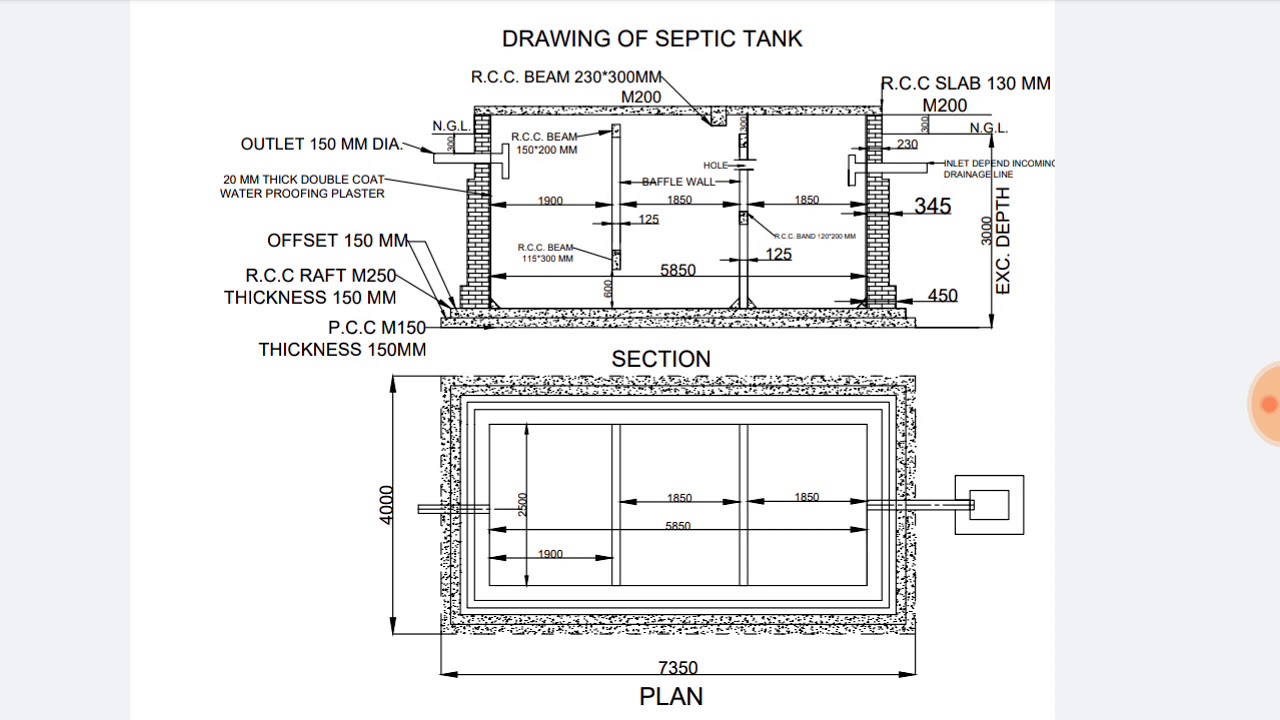
A two- to three-bedroom house usually requires a minimum of a 1000-gallon capacity tank. It is connected to the house’s waste drains by a pipe that feeds into the tank inlet. Partial walls inside the tank known as baffles are meant to promote the settling of waste. Although older tanks may not have them, most new tanks are fitted with filters that prevent smaller particles from entering the drain field. The septic tank design used in 1975 was a widely popular and effective way to treat and dispose of household wastewater.
The Civil Engineering Firm for Septic Systems
It is important to maintain the septic tank and have it pumped out regularly to remove the accumulated solids and prevent them from entering the second compartment and potentially clogging the leach field. It is important to have the septic tank pumped out regularly to remove the accumulated solids from the first compartment. How often the tank needs to be pumped depends on the size of the tank and the amount of wastewater it handles, but a general rule of thumb is to have it pumped out every 3-5 years. Future septic tank design is likely to incorporate new materials that offer enhanced durability, resistance to corrosion, and improved performance. Pumping is a crucial aspect of septic tank maintenance, and advancements in pumping technology during the 1970s made this process more efficient and convenient.
All septic tanks eventually fill with sediments and must be pumped out on a regular basis in order to remain in excellent functioning order. If the tank’s lid is not on a riser at ground level and you are not the home’s original owner, you may be unable to determine where the lid is located. A typical septic tank is 4 inches to 4 feet underground, with all of its components, including the cover, buried between 4 inches and 4 feet underneath. This is true regardless of whether the septic tank is equipped with special risers that keep the lid flush with the surface of the ground.
Learn more about septic systems
Septic tanks are usually located between ten to 25 feet away from the home. Insert a thin metal probe into the ground every few feet, until you strike polyethylene, fiberglass or flat concrete. How long the system lasts depends on a number of factors, including construction material, soil acidity, water table, maintenance practices, and several others. Most tanks were still single compartment 750, 1,000 or 1,200-gallon tanks, usually depending on the size of the house. In the 1970s, the standards of practice again improved and 1,000 and 1,200-gallon two-compartment tanks became the standard. In 1995, code changed to allow an open tee for an inlet, as opposed to a 90-degree elbow or plugged tee.
The size and position of the baffle were important factors in the effectiveness of the septic tank in separating solids and liquids. The septic tank also had an inlet and outlet pipe to allow for the flow of wastewater into and out of the tank. The environmental consciousness that emerged in the 1970s led to a greater emphasis on eco-friendly septic practices.
The solids stay in the tank while the wastewater is discharged to the drainfield for further treatment and dispersal. If your drains are slowing down or you have a new pond in your backyard, it may be a sign that your tank needs to be pumped. The EPA (Environmental Protection Agency) also recommends that septic tanks be inspected every three years by a professional.
Here is the fundamental arithmetic for calculating the capacity (volume) of a septic tank in gallons. We offer Professional Civil Engineering design services for septic system design work. We take a practical approach to developing a readily buildable septic system engineering design for the site's long term use. Evapotranspiration systems are only useful in specific environmental conditions. These systems work well in shallow soil; however, they are at risk of failure if it rains or snows too much.




No comments:
Post a Comment